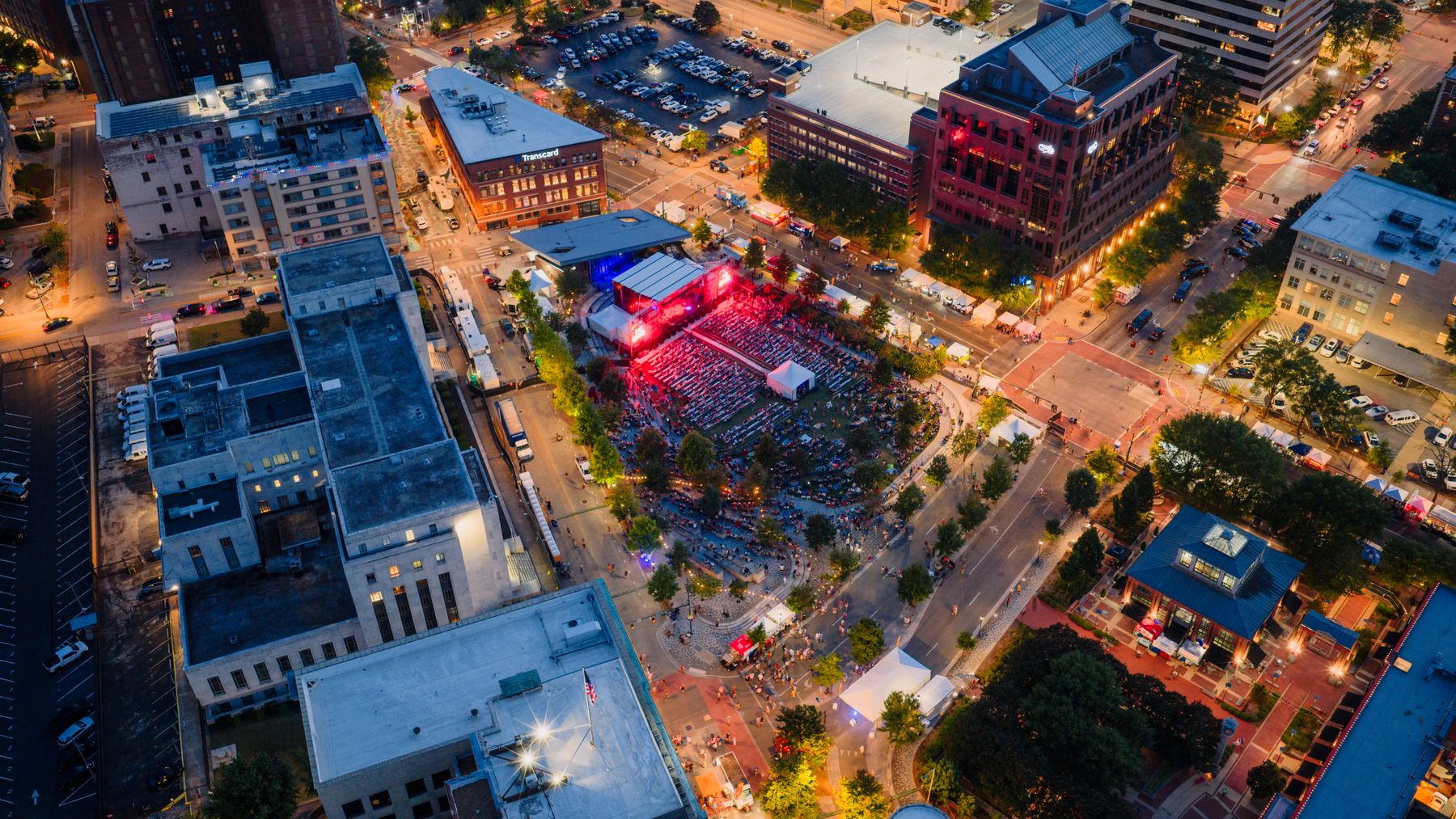
Downtown Springfield is built around a public square that still functions as the town's civic living room, with the Robertson County Courthouse at its centre and storefronts facing inward on all four sides. The current courthouse is a twentieth-century building, but the square's layout preserves the nineteenth-century plan, and reading the historic markers around it takes twenty minutes and costs nothing. The Masons礼 and Odd Fellows halls, the old bank facades and the varied brick cornices above the shopfronts reward a slow walk. Park once near the square and do the centre on foot; side streets are metered or free depending on block.
The square is also where you eat. Several small restaurants and coffee shops occupy the ground floors of historic buildings, and lunch here is the natural midpoint of a culture day. Note that many independent businesses close on Sundays and Mondays, so a Tuesday-to-Saturday visit gives you the most options. Mornings are quietest for photography; the light on the north-side brickwork is best before about ten. From the square, most of the stops below are within a ten-minute walk or a five-minute drive.
The Robertson County History Museum occupies a former post office building a short walk from the square, and its exhibits track the county from early settlement through the tobacco and dark-fired tobacco economy that shaped the surrounding farmland. Displays cover local military history, domestic life and the county's distinctive place in regional agriculture. Admission is typically modest or by donation, and a thorough visit takes about an hour. Opening hours are limited and volunteer-run, so confirm before you travel rather than assuming a weekday opening.
For family research, the adjacent archival holdings and the county library's local history room are the practical starting points. Staff and volunteers can point you to cemetery indexes, newspaper microfilm and property records. If you are tracing relatives from Robertson County, book two hours rather than one and bring names and approximate dates. The library is the more reliable of the two for walk-in access, while the museum is better for context. Neither charges research fees beyond copying costs, which are nominal.
Springfield's residential historic district spreads north and west of the square, with late nineteenth and early twentieth-century houses in Queen Anne, Colonial Revival and vernacular forms. The Elmwood and North Main Street corridors are the most rewarding for a self-guided walk, and a loop of roughly a mile covers the best concentrations. Private homes are not open to the public, so treat this as architecture and streetscape rather than house tours. Comfortable shoes matter; several sidewalks are uneven, and summer heat from June to August is genuine, so walk early.
Churches near the centre, including the historic congregations on Main and Fifth, add to the streetscape and several have notable stained glass visible from the exterior. The Springfield Baptist and First United Methodist buildings are worth a look from the pavement. Do not enter during services. For a guided overview, the local chamber and tourism office can supply walking-tour leaflets and event calendars. Fall, from late September to early November, is the best season for this walk: cooler, and the tree canopy over the older streets is at its best.
Springfield sits about thirty-five minutes north of Nashville via US-41 and Interstate 24, which makes it a viable base for travellers who want small-town evenings and a straightforward run into the city. Hotels cluster along Memorial Boulevard and the US-41 approach, a short drive or a twenty-minute walk from the square. Staying downtown-adjacent puts the museum, library and historic district within easy reach and saves repeated parking. Book two nights if you want the culture stops plus a half-day in the surrounding countryside.
Skip anything that requires a long detour for a single small exhibit. The county's strongest draws are concentrated in and around the square, so a compact itinerary beats a scattered one. If you have a third day, the Amish community around Adams and Cedar Hill, roughly twenty to twenty-five minutes northwest, is worth a half-day side trip; check local expectations for photography before you go. Otherwise, give the square and the history museum your morning and leave the afternoon free for the residential walk.
About thirty-five minutes by car via US-41 and Interstate 24, roughly thirty-five miles depending on your starting point in Nashville. Traffic near Nashville can add time at peak hours, so allow forty-five minutes on weekday mornings.
Most hotels sit along Memorial Boulevard and the US-41 corridor, a twenty-minute walk or five-minute drive from the square. Downtown-adjacent properties are limited, so check distances carefully when booking and confirm parking is included.
Hours are limited and volunteer-dependent, so confirm directly before travelling rather than relying on older listings. Weekday openings are more likely than weekends. The county library's local history room is the more dependable walk-in option.
Late September to early November offers the most comfortable temperatures for the historic district walk. Spring is also pleasant but wetter. July and August afternoons are hot and humid, so plan outdoor time before ten in the morning.
Not for the square, museum, library and historic district, which are walkable from each other. You do need a car for the surrounding countryside, including Adams and Cedar Hill, where public transport is effectively absent.
The houses in the residential district north and west of the square are private residences and not open to the public. Treat the area as a streetscape walk. Ask the tourism office about any scheduled open-house events during your dates.
About an hour for the exhibits, or two hours if you are using the archival collections for family research. Bring names and approximate dates, and expect small copying charges rather than research fees.
Skip long detours for single small exhibits. Concentrate on the square, the history museum and the residential walk, which together fill a comfortable morning and early afternoon, and leave outlying communities for a return visit.
Every booking through Springfield Destinations funds one verified tonne of carbon removal — same room, same price, no markup.
Find a stay